
Trust in Every Bite: Halal Bakery
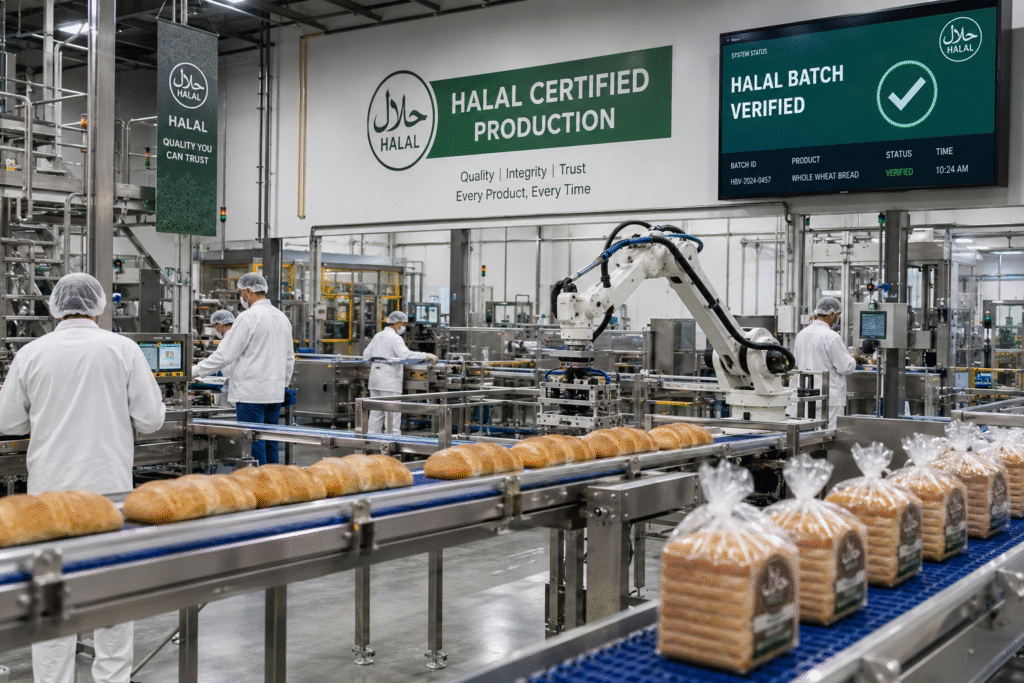
Short Summary
Bakery products are enjoyed in homes, restaurants, cafés, and workplaces across the world. From freshly baked bread and pastries to cakes, biscuits, and cookies, these products are a staple of everyday life. However, in the halal food industry, producing bakery items involves much more than creating great taste and texture. Every ingredient, process, and handling practice must align with halal principles to ensure consumer confidence and product integrity. As the global halal market continues to grow, understanding halal bakery products has become increasingly important for manufacturers, suppliers, retailers, and consumers alike.
Introduction
Walk into any supermarket, bakery, or convenience store and you will find shelves filled with a wide variety of baked goods. Bread for breakfast, biscuits with tea, cakes for celebrations, and pastries for a quick snack have become part of everyday life for millions of people around the world.
Because bakery products are often associated with simple ingredients such as flour, sugar, and water, many consumers naturally assume that all baked goods are halal. In reality, modern bakery manufacturing is far more sophisticated than most people realize.
Behind every loaf of bread or packaged biscuit is a carefully designed formulation that may contain dozens of ingredients. Emulsifiers, flavorings, enzymes, shortening, preservatives, glazing agents, and processing aids are commonly used to improve texture, extend shelf life, enhance appearance, and maintain product consistency. While these ingredients play an important role in production, they can also introduce halal compliance challenges if their origin and manufacturing methods are not properly verified.
Today’s consumers are more informed than ever before. They are not only interested in how food tastes but also in how it is sourced, produced, and certified. For Muslim consumers in particular, halal assurance provides confidence that products meet their religious requirements while also reflecting standards of cleanliness, transparency, and ethical responsibility.
As a result, halal bakery production has evolved from a niche requirement into a critical component of the global food industry. Companies that understand and embrace halal principles are increasingly viewed as trustworthy, quality-focused, and consumer-centric businesses.
Understanding What Makes a Bakery Product Halal
The halal status of a bakery product is determined by much more than its final appearance. A cake may look identical to another cake, and two biscuits may taste exactly the same, yet one may qualify as halal while the other does not.
This distinction lies in the ingredients used, the methods of production, and the controls implemented throughout the supply chain.
For a bakery product to be considered halal, it must meet several key requirements:
- All ingredients must originate from halal sources.
- Manufacturing processes must prevent contamination with non-halal materials.
- Storage and transportation systems must maintain product integrity.
- Production facilities must follow recognized halal standards.
- Documentation and traceability systems must support compliance verification.
Halal is therefore not simply an ingredient issue; it is a comprehensive quality assurance system that covers every stage of production.
The Foundation of Halal Bakery Products: Ingredient Integrity
Every successful bakery product begins with its ingredients. Whether producing artisan bread or large-scale commercial biscuits, ingredient selection forms the foundation of halal compliance.
Many core bakery ingredients are naturally halal and present minimal concerns. These include:
- Wheat flour
- Sugar
- Salt
- Water
- Yeast
- Vegetable oils
However, modern bakery production rarely relies on these ingredients alone.
To achieve the texture, softness, flavor, and shelf life expected by consumers, manufacturers often incorporate a range of specialized ingredients. It is within these ingredients that halal risks most commonly arise.
For example, an emulsifier used to improve dough stability may be derived from plant oils or animal fats. A flavoring compound may contain processing agents that require verification. An enzyme used to improve baking performance may originate from microbial, plant, or animal sources.
Without proper supplier controls and documentation, identifying these risks can become difficult.
This is why leading halal bakery manufacturers place significant emphasis on ingredient traceability and supplier transparency. Every ingredient must be evaluated not only for functionality and quality but also for halal compliance.
Bread Products: Simple in Appearance, Important in Compliance
Bread is often viewed as one of the simplest bakery products. Yet it remains one of the most consumed foods globally and therefore carries significant importance within the halal food sector.
Traditional bread recipes typically contain only a handful of ingredients, making halal compliance relatively straightforward. However, commercial bread production often involves additional ingredients designed to improve performance and consistency.
Modern bread formulations may include:
- Dough conditioners
- Enzyme preparations
- Emulsifiers
- Preservatives
- Improver
Although these ingredients are used in small quantities, they can have a major impact on halal status.
For manufacturers, ensuring the halal integrity of bread products requires looking beyond the basic recipe and carefully evaluating every component involved in production.
Cakes and Pastries: Managing Complexity in Halal Production
Among all bakery categories, cakes and pastries are often the most challenging from a halal compliance perspective.
Unlike bread, these products frequently contain a wide variety of ingredients, including fillings, toppings, creams, flavorings, and decorative elements. Each additional ingredient increases the need for verification and control.
A typical commercial cake may contain:
- Dairy ingredients
- Vegetable fats
- Cocoa products
- Fruit preparations
- Flavor compounds
- Food colorings
- Stabilizers
- Decorative toppings
Many of these ingredients are sourced from multiple suppliers and may undergo several processing stages before reaching the bakery.
As product formulations become more sophisticated, maintaining halal integrity requires strong supplier partnerships, robust documentation systems, and ongoing quality monitoring.
The Growing Importance of Halal-Friendly Bakery Fats
Fats are essential components in many bakery products. They contribute to texture, moisture retention, mouthfeel, and overall product quality.
Common bakery fats include:
- Palm oil
- Palm olein
- Vegetable shortening
- Margarine
- Butter
While vegetable-based fats are generally considered halal, manufacturers must still verify supporting ingredients used during production. Emulsifiers, processing aids, and blended fat formulations can sometimes create compliance concerns.
As consumer awareness grows, many food manufacturers are choosing halal-certified fats and oils to strengthen transparency and reduce sourcing risks.
Flavorings, Additives, and Processing Aids: Small Components with Significant Impact
In bakery manufacturing, some of the most important ingredients are used in the smallest quantities.
Flavorings, colorants, stabilizers, and processing aids may represent only a fraction of a product’s formulation, yet they often require the highest level of scrutiny.
Vanilla flavor, for example, is widely used throughout the bakery industry. However, depending on how it is manufactured, the extraction process may involve substances that require halal assessment.
Similarly, food colorings, glazing agents, and specialty ingredients may originate from complex supply chains involving multiple processors and suppliers.
For this reason, successful halal bakery programs rely on comprehensive ingredient approval systems rather than assumptions based on ingredient names alone.
Why Manufacturing Processes Matter
Even when every ingredient has been verified as halal, compliance can still be compromised during production.
The manufacturing environment plays a critical role in protecting halal integrity.
Potential risks include:
- Shared equipment used for non-halal products
- Insufficient cleaning procedures
- Incorrect ingredient handling
- Inadequate storage controls
Cross-contamination during packagingBakery products are enjoyed in homes, restaurants, cafés, and workplaces across the world. From freshly baked bread and pastries to cakes, biscuits, and cookies, these products are a staple of everyday life. However, in the halal food industry, producing bakery items involves much more than creating great taste and texture
These challenges are particularly relevant in large-scale facilities that manufacture multiple product categories.
To address these risks, many companies implement dedicated halal production lines, validated cleaning programs, and detailed operational procedures designed to maintain compliance throughout the manufacturing process.
Halal Certification: More Than a Logo on Packaging
For consumers, a halal certification mark provides reassurance. For manufacturers, it represents a commitment to accountability, transparency, and continuous compliance.
A reputable halal certification program typically evaluates:
- Ingredient sourcing practices
- Supplier qualification procedures
- Production operations
- Sanitation controls
- Product traceability systems
- Packaging and labeling processes
- Storage and distribution activities
Certification serves as an independent verification that a company has implemented the systems necessary to protect halal integrity from raw material sourcing to final delivery.
Meeting the Expectations of Modern Halal Consumers
The halal market has evolved significantly over the past decade.
Consumers today expect much more than basic compliance. They want products that align with broader values such as quality, sustainability, transparency, and responsible sourcing.
Modern halal consumers increasingly seek:
- Clean-label products
- Natural ingredients
- Ethical sourcing practices
- High food safety standards
- Transparent supply chains
- Reliable certification
This shift is encouraging bakery manufacturers to raise standards across every aspect of production.
Conclusion
Halal bakery products are far more than a category of food. They represent a commitment to integrity, quality, and consumer trust.
From ingredient sourcing and product development to manufacturing, certification, and distribution, every stage of the process contributes to maintaining halal compliance. In an industry where consumer confidence is paramount, transparency and accountability have become essential drivers of long-term success.
As the global halal economy continues to expand, bakery manufacturers that prioritize authenticity, robust quality systems, and certified supply chains will not only meet consumer expectations but also strengthen their position in one of the world’s fastest-growing food markets.
Frequently Asked Questions
Q. Are all bakery products automatically halal?
No. While many bakery ingredients are naturally halal, additives, flavorings, enzymes, emulsifiers, and processing methods must also be assessed to ensure compliance.
Q. Why are bakery additives important in halal certification?
Many additives are produced through complex manufacturing processes and may originate from animal or non-halal sources, making verification essential.
Q. Can halal bakery products be exported internationally?
Yes. Halal-certified bakery products are widely traded globally and are increasingly sought after in both Muslim-majority and non-Muslim markets.
Q. Why is halal certification valuable for bakery manufacturers?
Certification enhances consumer trust, supports regulatory compliance, improves market access, and demonstrates a commitment to quality and transparency.