
The Rise of Halal Supplements in Modern Health and Nutrition
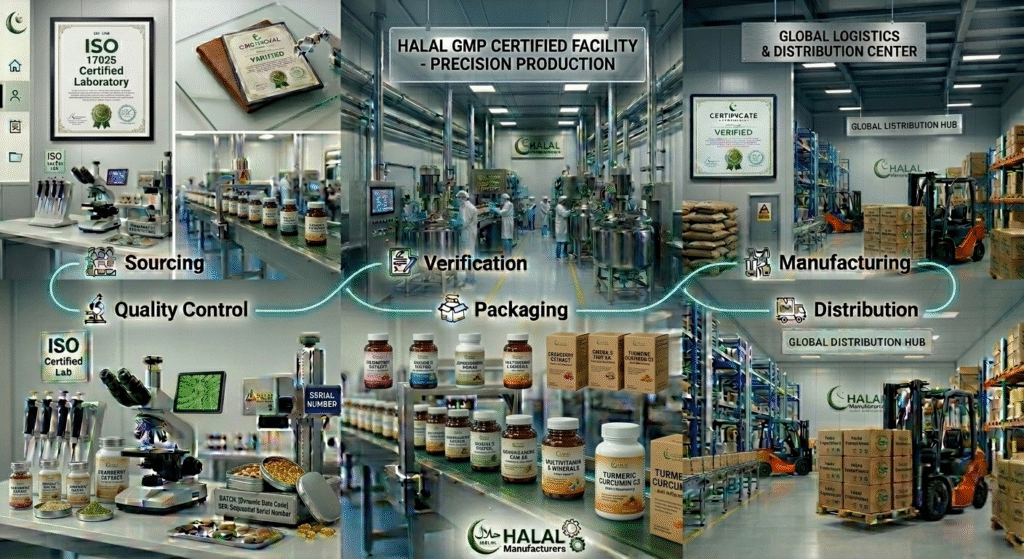
In today’s global health and fitness market, trust in what we consume has never been more important, and halal-certified supplements are emerging as a clear standard of purity, safety, and ethical integrity. Halal certification ensures that every part of a supplement—from ingredients to capsules, flavorings, and manufacturing processes—complies with Islamic dietary and ethical standards. It applies to vitamins, protein powders, herbal supplements, and medicinal products, making halal compliance a complete system of sourcing, production control, and certification. As a result, halal-certified supplements are widely recognized as a reliable benchmark for quality, safety, and transparency in the wellness industry.
Introduction
Today, supplements are part of everyday life for many people. Some use protein shakes after workouts, others depend on vitamins for daily nutrition, while many rely on herbal products or prescribed medicines to support their health.
At first glance, these products may look simple, but they are actually the result of detailed formulation processes where multiple ingredients work together for taste, stability, absorption, and effectiveness.
Along with the main active ingredient, manufacturers often add gelatin, flavor systems, sweeteners, stabilizers, coatings, and preservatives to improve performance and shelf life. These ingredients make production more complex and also highlight why sourcing and processing must be carefully considered, especially for consumers who prioritize halal compliance.
What Halal Really Means in Supplements
Halal in supplements is not just about reading a label. It is a complete system that covers the entire product lifecycle, from sourcing to final distribution, ensuring every step meets halal requirements.
A product is considered halal when ingredients come from approved sources, there is no contamination with non-halal materials, and strict hygiene, traceability, and certification standards are followed. In simple terms, halal is about control, transparency, and trust at every stage..
Why Supplement Formulas Are Complex
Most supplements look simple from the outside, but they are actually highly engineered products made from carefully balanced formulations. A single product can include active nutrients or pharmaceutical compounds along with capsule or tablet structures designed for delivery.
In addition to these, manufacturers often use flavor systems, sweeteners, stabilizers, coating layers, preservatives, and processing aids to improve taste, consistency, protection, and shelf life. Each ingredient serves a specific function, but all of them must be evaluated for halal compliance. Since ingredients are often sourced from different countries and suppliers, the supply chain becomes just as important as the final formulation.
Ingredient Integrity: The Core of Halal Compliance
Halal supplements begin with proper ingredient verification, as the final product cannot be considered fully halal unless every component is carefully checked and approved.
Common ingredients include vitamins and minerals, amino acids, herbal extracts, protein sources such as whey, soy, and pea, along with gelatin used in capsules, flavoring systems, colorants, emulsifiers, stabilizers, and binding or coating agents. Since some ingredients are plant-based or synthetic while others may come from animal sources, each one must be individually verified to ensure full halal compliance.
Protein Supplements and Everyday Nutrition
Protein supplements are widely used by athletes and health-conscious individuals.
They include:
- Whey protein powders
- Plant-based protein blends
- Mass gain formulas
- Meal replacement shakes
Even though protein is generally acceptable, most products contain additional ingredients like flavors, enzymes, and emulsifiers. That means halal compliance depends on the full formula, not just the protein itself.
Vitamins, Supplements, and Medicines in Daily Use
Many people assume vitamins and medicines are simple, but they often contain multiple supporting ingredients.
These products may come in:
- Tablets
- Capsules
- Softgels
- Syrups
- Liquid forms
Inactive ingredients like capsule shells, binders, coatings, and preservatives are essential for production—but they also require halal verification. In halal compliance, inactive ingredients are just as important as active ones.
Herbal Products and Natural Ingredients
Herbal supplements are often assumed to be naturally halal because they are derived from plants. However, the processing stage plays an equally important role in determining their final compliance status.
During production, herbal products may involve extraction methods, solvents and carriers, added flavor systems, stabilizers, and preservatives. Because of this, even natural ingredients must be carefully evaluated from sourcing to final formulation to ensure full halal compliance.
Manufacturing: Where Compliance Can Break
Even when all ingredients used are halal, compliance can still be affected during the production process. Common risks include the use of shared equipment with non-halal products, insufficient cleaning between production batches, cross-contamination during manufacturing, and improper storage or handling practices.
To prevent these issues, manufacturers implement strict control systems such as dedicated halal production lines, validated cleaning procedures, segregated storage areas, and strong documentation and quality control processes. These measures help ensure that halal integrity is maintained throughout the entire manufacturing process.
Gelatin and Why It Matters
Gelatin is one of the most sensitive ingredients used in supplements due to its wide application and variable sourcing. It is commonly found in capsules, softgels, and gummies, where it plays an important role in shaping texture, stability, and product delivery. However, its halal status depends entirely on the source material and how it is processed.
To address this concern, many manufacturers are now shifting toward alternatives such as halal-certified gelatin, fish-based options, plant-based capsules, and vegetarian softgel systems. These solutions help ensure compliance while maintaining product quality and functionality.
Hidden Ingredients That Matter
Some of the most important components in supplements are used in very small quantities, yet they can still have a significant impact on halal compliance. These include flavor systems, sweeteners, color additives, anti-caking agents, enzymes, and preservatives, all of which are widely used to improve taste, appearance, stability, and shelf life.
Even though they are present in minimal amounts, these ingredients require careful verification because they often come from complex and multi-stage supply chains. Proper sourcing and documentation are therefore essential to ensure full halal compliance.
Why Halal Certification Matters
Halal certification is an independent confirmation that a product meets all required halal standards across its entire lifecycle. It ensures that every stage of production is properly evaluated, from raw material sourcing to final handling and distribution.
The certification process typically checks ingredient sourcing, supplier approval, manufacturing practices, hygiene and cleanliness standards, traceability systems, packaging accuracy, and storage and distribution controls. For consumers, it builds trust and confidence, while for companies, it enhances credibility and improves access to global halal markets..
Why HalalManufacturers.com
As the halal supplement industry continues to expand, businesses need reliable partners that understand the importance of compliance, quality, and transparency. HalalManufacturers.com helps bridge that gap by connecting brands with trusted halal-compliant manufacturers and suppliers.
By supporting halal-focused product development, promoting supply chain transparency, and encouraging strong compliance standards, HalalManufacturers.com helps businesses build reliable and scalable product lines. In a market where consumer trust and verification are increasingly important, having access to trusted manufacturing and sourcing solutions can be a valuable advantage.
Growing Global Demand
The demand for halal supplements continues to grow due to increasing consumer awareness, greater demand for transparency, expanding global halal trade, and a stronger preference for certified and trusted products.
Today, halal supplements are valued not only for religious compliance but also for their association with quality, reliability, and responsible manufacturing practices.
Conclusion
Halal supplements are defined by more than their ingredients. They reflect a complete system of sourcing, manufacturing control, and certification that ensures transparency and trust.
As global demand continues to rise, companies that prioritize strict compliance and verified production systems will be better positioned to serve consumers and grow in international markets.
FAQ
Q1. Are all supplements automatically halal?
No. Even if the main ingredient is halal, other components like gelatin, flavorings, and processing aids must also be verified.
Q2. Why is gelatin important in halal supplements?
Gelatin is widely used in capsules and gummies. Its halal status depends on whether it comes from a halal-approved source.
Q3. Can medicines be halal certified?
Yes. Many medicines can be certified if all ingredients, processes, and handling systems meet halal requirements.
Q4. Is plant-based always halal?
Not always. Plant-based ingredients can still be processed using non-halal solvents or additives, so verification is necessary.
Q5. Why is halal certification important?
It provides independent assurance that a product meets halal standards across sourcing, production, and handling.