
From Bean to Brew: The Halal Coffee & Tea Market
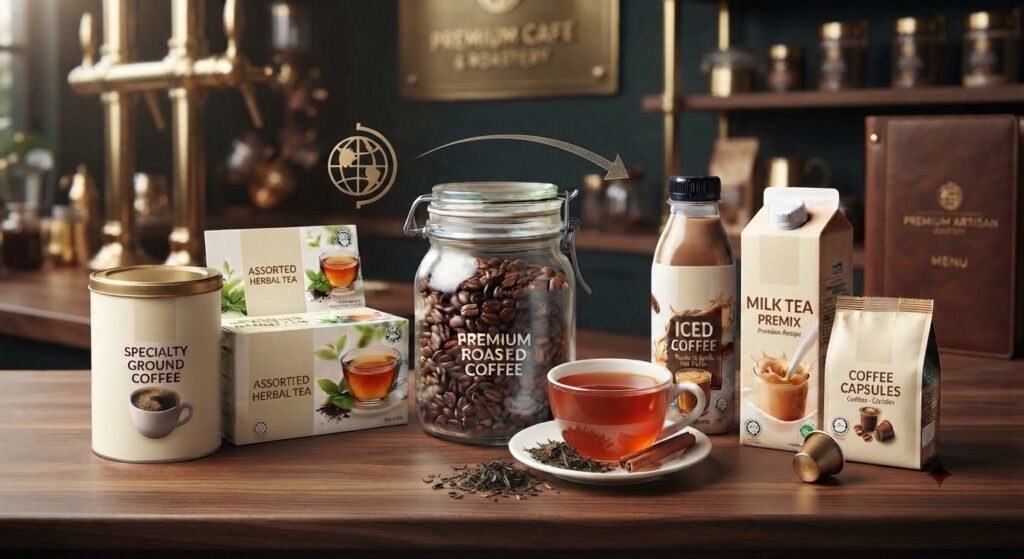
A coffee bean or tea leaf may be the main ingredient, but many products on store shelves contain much more. Flavored coffees, instant cappuccino mixes, milk teas, creamers, and ready-to-drink beverages can include ingredients such as dairy, sweeteners, flavorings, emulsifiers, and stabilizers.
As consumers become more conscious of the products they buy, halal certification has become an important consideration in many markets. This has opened opportunities for manufacturers and suppliers to develop halal coffee and tea products while giving importers, distributors, retailers, and private-label brands more choices when sourcing products for their customers.
More Than Just a Cup
A coffee bean or tea leaf may be the main ingredient, but many products on store shelves contain much more. Flavored coffees, instant cappuccino mixes, milk teas, creamers, and ready-to-drink beverages can include ingredients such as dairy, sweeteners, flavorings, emulsifiers, and stabilizers.
For businesses serving halal markets, it is therefore important to look at the entire product rather than just its primary ingredient. Depending on the product, halal requirements may also relate to how ingredients are sourced, processed, handled, stored, and manufactured. Working with a suitable halal certification body can help manufacturers demonstrate that their products meet the relevant requirements.
Coffee Is Taking on New Forms
Coffee has come a long way from the traditional cup of brewed or instant coffee. Consumers can now choose from specialty beans, ground coffee, capsules, flavored blends, premixes, cold coffee, and ready-to-drink options. Each format serves a different need, whether it is a carefully prepared specialty coffee or a quick drink for someone rushing to work.
This variety gives halal coffee manufacturers plenty of room to serve different segments of the market. Premium coffee can appeal to consumers interested in bean origin and roasting, while instant coffee and premixes can be suitable for supermarkets, offices, hotels, and everyday home use. Ready-to-drink coffee also gives brands another way to reach consumers through retail and foodservice channels.
From Specialty Beans to Instant Coffee
Specialty coffee has encouraged consumers to learn more about where their beans come from, how they are roasted, and how different varieties taste. Manufacturers serving this market can stand out through carefully selected beans, distinctive blends, and consistent quality. For halal-conscious consumers, certification can provide additional confidence when choosing these products.
Instant coffee and premixes focus more on simplicity. A sachet can combine coffee with creamer, milk powder, sweetener, or other ingredients, allowing a drink to be prepared in just a few minutes. Since these products contain more than coffee, manufacturers need to review the complete formulation when considering halal certification.
Tea Has a Market of Its Own
Tea is just as diverse as coffee. Black tea remains a familiar choice in many countries, but consumers can now find an extensive range of green teas, herbal blends, fruit teas, milk teas, and specialty products. This variety allows manufacturers to develop products for different tastes and occasions.
The growing range of tea products also creates opportunities for halal manufacturers. A basic tea product may have a simple formulation, while a flavored or ready-to-drink product can contain several additional ingredients. Manufacturers targeting international markets need to consider both local consumer preferences and the halal requirements that apply to their products.
From Black Tea to Herbal Blends
Black tea continues to be available in traditional formats such as loose leaves and tea bags, but flavored blends have become increasingly common. Green tea has also gained a strong international following and is often combined with ingredients such as lemon, mint, ginger, or fruit.
Herbal tea provides another area for product development. Ingredients such as chamomile, peppermint, hibiscus, and ginger can be combined to create different flavors and blends. Milk tea and instant tea mixes are also popular where convenience is important. When additional ingredients are used, manufacturers should review the full formulation and production process as part of their halal assessment.
What Makes Coffee and Tea Halal?
For plain coffee and tea, the ingredients are relatively simple. The picture can be different for processed products. Flavors, dairy ingredients, creamers, sweeteners, emulsifiers, stabilizers, enzymes, and processing aids may all be used depending on the product.
This is why halal compliance is about more than the main ingredient. Manufacturers may need to consider the complete production process and work with an appropriate halal certification authority. For buyers, checking the manufacturer’s certification and understanding which products it covers can provide useful assurance before entering into a supply agreement.
What Buyers Need to Check
Finding a coffee or tea supplier is not simply a matter of choosing the lowest price. International buyers need to look at a combination of factors, including certification, product quality, production capacity, packaging, minimum order quantities, lead times, and documentation.
Halal certification is an important starting point for buyers serving halal markets. It is worth confirming that the certification covers the products being purchased and is suitable for the intended market. Buyers should also ask for product specifications and clarify the ingredients used, particularly when purchasing flavored, instant, or ready-to-drink products.
Quality and Production Matter
Consistency is especially important in coffee and tea. A buyer may be happy with an initial shipment, but differences in taste, appearance, packaging, or overall quality in later orders can create problems for a brand or retailer. Reliable sourcing and proper quality-control procedures can help manufacturers maintain consistency.
Production capacity matters as well. A supplier may be able to handle a small trial order but struggle when a successful product starts generating larger demand. Buyers should discuss minimum quantities, production timelines, available packaging formats, and whether the manufacturer can increase output when required.
Private Label and Export Experience
Private-label manufacturing offers another route into the market. Businesses can work with an established manufacturer to develop coffee or tea products under their own brand without building a production facility. Depending on the supplier, services may include formulation, custom blends, packaging, labeling, and manufacturing.
For international buyers, export experience can be equally valuable. Overseas orders can involve certificates, shipping documents, packaging rules, customs requirements, and other market-specific regulations. A manufacturer that already works with international customers may be better prepared to handle these requirements and keep the sourcing process organized.
Convenience Is Changing the Industry
Convenience has become a major part of modern beverage consumption. Consumers often want products that require little preparation and can easily fit into busy schedules. This has helped single-serve coffee, tea bags, capsules, instant mixes, and ready-to-drink beverages become increasingly common.
For halal manufacturers, this shift creates opportunities across a variety of sales channels. Convenient coffee and tea products can be supplied to supermarkets, cafés, restaurants, hotels, offices, convenience stores, and online retailers. A well-developed halal product can therefore reach consumers in many different settings.
New Flavors, New Possibilities
The coffee and tea industry continues to experiment with new flavors and product ideas. Consumers can now find everything from flavored specialty coffee to fruit-infused tea, botanical blends, spiced drinks, and milk-based beverages. Packaging and serving formats are also changing as brands look for ways to make their products more convenient and appealing.
For halal manufacturers, innovation can go hand in hand with careful ingredient sourcing and certification. A product does not have to be traditional to serve a halal market. Manufacturers can develop modern products that offer interesting flavors, convenient formats, attractive packaging, and the assurance that halal-conscious consumers are looking for.
Where the Business Opportunities Are
The market offers opportunities for businesses throughout the coffee and tea supply chain. Supermarkets, grocery stores, cafés, restaurants, hotels, foodservice companies, importers, distributors, online retailers, and private-label brands may all be looking for different types of products and suppliers.
There is also no single approach for manufacturers. Some may focus on supplying bulk coffee or tea, while others may specialize in finished retail products, specialty blends, private-label production, or ready-to-drink beverages. Understanding what a particular buyer needs can help manufacturers build better products and stronger commercial relationships.
Finding the Right Manufacturing Partner
Finding a suitable manufacturer can take time, particularly when sourcing from overseas. A general internet search may produce hundreds of companies, but it can be difficult to determine which ones have the right certification, product range, manufacturing capacity, or export experience.
A specialized directory can make that initial search easier. Halal Manufacturers brings manufacturers and suppliers together across different halal product categories, giving businesses a dedicated place to discover potential partners. The Coffee & Tea category provides buyers with a focused starting point when searching for halal coffee, tea, blends, and related products.
What Comes Next for Halal Coffee & Tea?
The coffee and tea industry is likely to keep changing as consumer preferences evolve. Convenience, quality, new flavors, attractive packaging, product variety, and greater interest in ingredients are all influencing purchasing decisions. At the same time, halal certification remains an important consideration for businesses serving Muslim consumers and markets where halal products are required or preferred.
For manufacturers, this creates opportunities to combine familiar products with new ideas. Specialty coffee, herbal tea, instant beverages, ready-to-drink products, private-label services, and innovative blends can all play a role in the future of the category. Businesses that focus on consistent quality, responsible sourcing, and the needs of their target customers can explore opportunities both locally and internationally.
From the Bean and Leaf to the Global Market
Coffee and tea may be traditional beverages, but the market around them is constantly evolving. New flavors, formats, packaging, and consumer habits are changing how these products are made, sold, and enjoyed.
For halal coffee and tea manufacturers, this changing market can create opportunities to reach new customers and expand into international markets. For buyers, finding a reliable supplier means looking beyond the product itself and considering certification, quality, capacity, documentation, and long-term supply.
The journey from bean to brew is ultimately about more than making a good cup of coffee or tea. It is about understanding what today’s consumers want, meeting the requirements of different markets, and building reliable connections between manufacturers, suppliers, and buyers around the world.
Frequently Asked Questions
Is coffee halal?
Plain coffee is generally considered halal. However, processed coffee products may contain additional ingredients such as flavorings, creamers, dairy ingredients, or other additives. These ingredients may need to be reviewed according to the applicable halal requirements.
Is tea halal?
Plain tea is generally considered halal. However, flavored, blended, milk-based, instant, and ready-to-drink tea products can contain additional ingredients that should be checked when assessing halal compliance.
Why is halal certification important for coffee and tea?
Halal certification can provide assurance that a product and its relevant manufacturing processes have been assessed against the requirements of an applicable halal certification authority. It can also help manufacturers communicate their compliance to buyers and consumers.
What should buyers check before choosing a halal coffee or tea manufacturer?
Buyers should look at halal certification, ingredients, product quality, manufacturing capacity, minimum order quantities, packaging, lead times, export experience, and product documentation. These factors can help determine whether a supplier is suitable for the intended market.
Can coffee and tea be produced under a private label?
Yes. Many manufacturers offer private-label options, although the services available vary from supplier to supplier. These may include custom blends, formulation, packaging, labeling, and production.
Where can businesses find halal coffee and tea manufacturers?
Businesses can explore the Coffee & Tea category on Halalmanufacturers.com to discover manufacturers and suppliers and find potential partners for sourcing, private-label production, and other coffee and tea requirements.
