
Global Halal Market Trends and Opportunities for Businesses
THE HALAL INDUSTRY: A GLOBAL MOVEMENT
The halal industry has grown from being a niche segment into a powerful global movement. Today, halal-certified products go far beyond food — they include cosmetics, pharmaceuticals, travel, and even logistics. The demand for halal goods continues to rise across every continent. What’s even more interesting is that this demand isn’t coming only from Muslim consumers. More people around the world are paying attention to what they eat, drink, and use. They prefer halal-certified products because they represent cleanliness, ethical sourcing, and quality you can trust. As a result, the halal market has become one of the most promising opportunities for global businesses.
THE EXPANDING HALAL ECONOMY
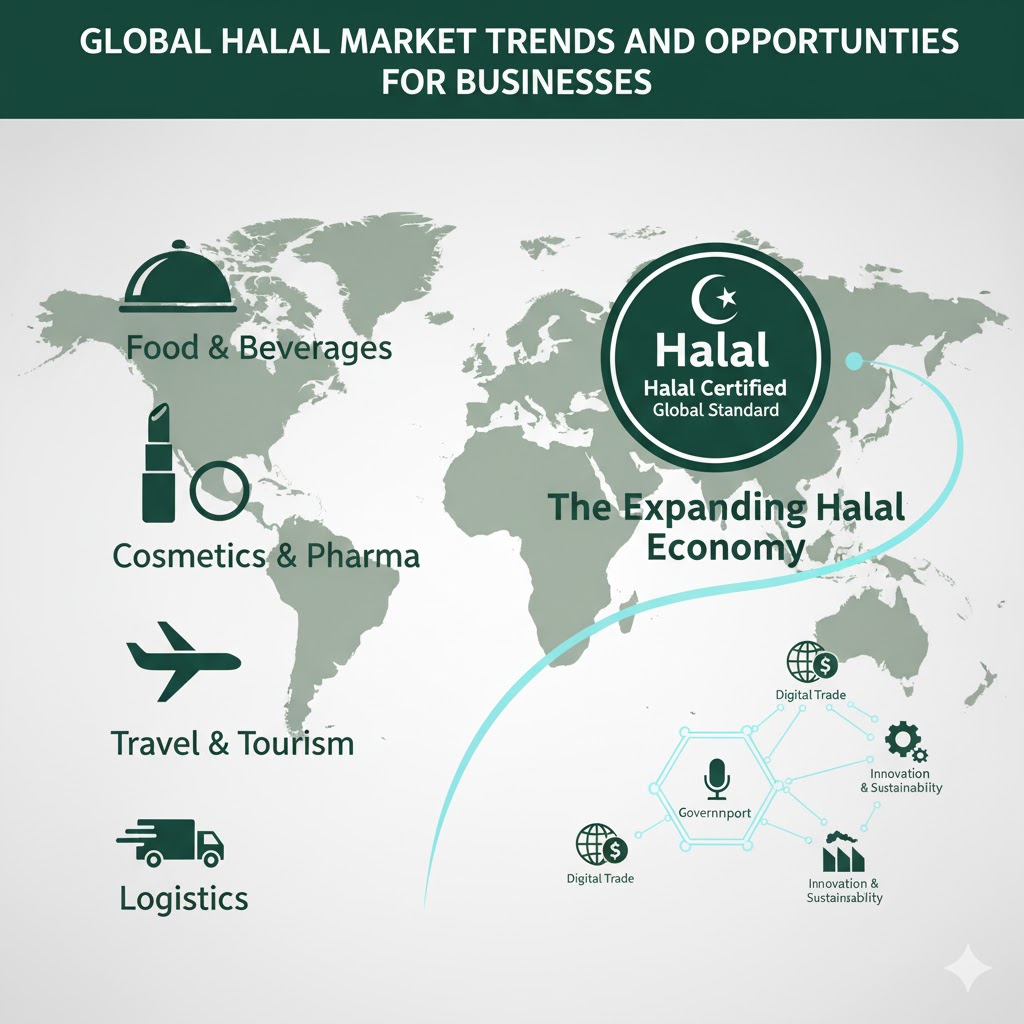
According to recent studies, the global halal economy is expected to exceed USD 9 trillion by 2035. What started as a food-based market has now expanded into multiple industries, including halal food and beverages, pharmaceuticals and supplements, cosmetics and personal care, travel and hospitality, and logistics. From processed snacks to ready-to-eat meals and drinks, halal food products are now available worldwide. In the healthcare sector, medicines and vitamins made without gelatin or alcohol are gaining popularity for their purity and safety. Ethical beauty brands are developing cruelty-free and alcohol-free products that meet halal standards, while Muslim-friendly hotels, airlines, and tour operators are making travel more inclusive. Certified logistics providers ensure that halal integrity is maintained throughout storage and transport. This massive expansion shows that halal has evolved beyond religious observance — it’s now a lifestyle choice for many who care about integrity, safety, and sustainability.
HALAL GOES MAINSTREAM
Halal is no longer limited to Muslim-majority countries. You can now find halal-certified meals in global fast-food chains, supermarkets, and even online marketplaces. Consumers — Muslim and non-Muslim alike — are drawn to halal because it symbolizes transparency, hygiene, and ethical production. In short, halal has become synonymous with trust.
THE RISE OF DIGITAL TRADE
E-commerce has made it easier than ever for halal producers to connect with buyers around the world. Platforms such as the Global Halal Platform help manufacturers showcase certifications, build credibility, and access new markets directly. New technologies like blockchain and QR code tracking are also revolutionizing the halal supply chain, allowing customers to trace the entire journey of a product — from source to shelf — with a simple scan.
GOVERNMENT SUPPORT AND INVESTMENT
Many governments, especially in Malaysia, Indonesia, and the UAE, are actively supporting the halal sector. They’ve set up national halal hubs, established strong certification systems, and promoted halal exports as a key part of their economic growth strategies. This collaboration between governments and industries is helping halal become a truly global standard.
INNOVATION AND SUSTAINABILITY
Today’s halal businesses are not just focusing on certification — they’re leading innovation. From plant-based and organic halal foods to eco-friendly cosmetic lines, companies are aligning with sustainability goals that appeal to the next generation of consumers. These new products show that halal and sustainability can go hand in hand, offering a healthier future for both people and the planet.
REGIONAL OPPORTUNITIES AROUND THE WORLD
In Southeast Asia, Malaysia and Indonesia continue to dominate in halal certification and exports, setting benchmarks for others to follow. In the Middle East, the Gulf countries import large quantities of halal food, cosmetics, and pharmaceuticals to serve their local and expatriate markets. Across Europe and North America, the demand for halal products is growing as Muslim communities expand and health-conscious consumers turn to halal for its clean-label image. Africa, with its strong agricultural resources, is emerging as a promising halal production hub, while South Asia — particularly Pakistan and India — are leading exporters of halal meat and processed foods. Each region offers unique growth opportunities for businesses ready to adapt and invest in halal certification.
BUSINESS OPPORTUNITIES IN THE HALAL SECTOR
Businesses exploring halal markets can benefit in many ways. Through private label manufacturing, companies can produce halal-certified goods for global brands and retailers looking to expand their product lines. Export growth can be achieved by reaching fast-growing halal markets with proper certification and marketing strategies. There is also potential in certification consulting, helping smaller companies meet international halal standards and enter global markets. Additionally, the rise of halal tourism presents opportunities for launching certified hotels, travel packages, or food services catering to Muslim travelers. By entering the halal sector, businesses can increase profitability while aligning with consumer values of trust, integrity, and quality.
CHALLENGES TO KEEP IN MIND
Despite the opportunities, the halal industry comes with challenges. Certification standards can vary from country to country, creating confusion for exporters. For new businesses, the certification process might also seem costly or complicated. However, by partnering with recognized halal authorities and training staff on compliance, these challenges can be managed effectively. In the long run, the trust and market access gained through certification far outweigh the initial effort.
CONCLUSION
The global halal market stands as a symbol of ethics, transparency, and quality — values that resonate with consumers everywhere. For businesses, it’s not just a market trend but a long-term opportunity to grow responsibly and globally. Companies that invest in halal certification, innovation, and sustainable practices will be well-positioned to serve a new generation of consumers who care deeply about what they buy and believe in. The halal economy is expanding rapidly — and now is the perfect time for manufacturers, exporters, and entrepreneurs to take their place in this thriving global movement.

