
Breakfast Products Manufacturing: From Farm to Table (Complete 2026 Guide)
Short Summary
This guide provides a step-by-step overview of how breakfast products are made, explains key breakfast categories and production methods, offers insights into ingredient sourcing, quality control, and certifications, and highlights market trends shaping breakfast foods in 2025–2026. It also shows how buyers can connect with trusted breakfast suppliers via HalalManufacturers.com.
Introduction: Why Breakfast Matters and How It’s Made
Breakfast is a vital part of daily nutrition and one of the most widely consumed meals around the world. The process of transforming raw agricultural ingredients into safe, nutritious, and ready-to-eat breakfast products—from cereals and bakery items to dairy products and spreads—requires careful attention at every stage. From sourcing quality ingredients to packaging finished products, manufacturers must meet strict safety and compliance standards to satisfy both local and international markets.
For importers, distributors, retailers, and food brands, finding reliable producers can be challenging. HalalManufacturers.com simplifies this process by connecting buyers with verified manufacturers across multiple breakfast segments. This guide provides a practical overview to help you understand production methods, evaluate suppliers, and make informed sourcing decisions.
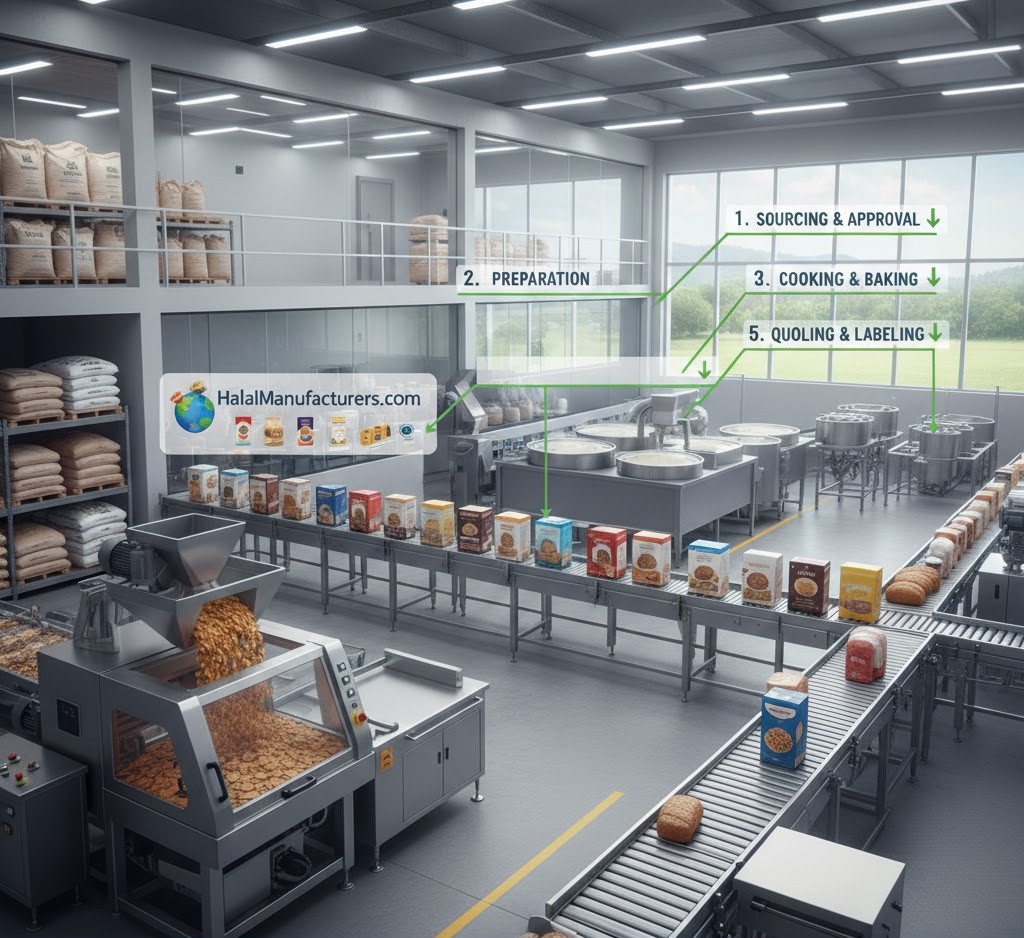
How Breakfast Products Are Made: Step by Step
Breakfast food production follows a structured workflow to ensure safety, consistency, and quality. Manufacturers operate under regulated systems that control the handling, processing, and packaging of ingredients to deliver products suitable for both domestic and export markets.
A strong manufacturing setup improves product reliability, extends shelf life, and reduces quality complaints. Lower-cost products often rely on basic ingredients and minimal controls, which can affect consistency and durability. In contrast, established manufacturers invest in standardized procedures, thorough testing, and certification to meet international buyer expectations.
Sourcing Ingredients and Approval
The process begins with the careful selection of high-quality raw materials, including grains, dairy, fruits, nuts, oils, and natural sweeteners. Suppliers are evaluated and approved based on documentation, quality history, and compliance with food safety standards. Common ingredients used in breakfast products include wheat, oats, corn, rice, milk and dairy derivatives, eggs, vegetable oils, fruits, seeds, and nuts.
Cleaning and Preparing Ingredients
Once sourced, raw materials are cleaned, sorted, and prepared according to the requirements of each product. Grains may be milled or flaked, milk is pasteurized and standardized, fruits are washed, cut, or pureed, and nuts and seeds are roasted under controlled conditions. This stage ensures that all ingredients are safe, uniform, and ready for formulation.
Recipe Formulation and Blending
Manufacturers then develop recipes that meet nutritional targets, taste expectations, and shelf-life requirements. Ingredients are measured and blended using automated systems to ensure consistency across every batch. Popular formulations include breakfast cereals and granola, instant oats and porridge, dairy-based spreads, fruit and date syrups, and protein-enriched breakfast snacks.
Cooking, Baking, and Extrusion
The next stage depends on the type of product being manufactured. Cereals may undergo extrusion or baking, bakery items are mixed, proofed, and baked, dairy products are heated and fermented, and spreads are cooked and blended. Precise temperature control and timing are essential to maintain texture, flavor, and overall quality.
Cooling, Shaping, and Portioning
After cooking, products are cooled to stabilize their structure and prevent spoilage. Automated systems shape and portion items to ensure uniformity in weight and appearance, especially for retail-ready packaging.
Packaging and Labeling
Finished products are packed in food-grade materials designed to preserve freshness and protect during transport. Packaging formats may include pouches, cartons, jars, or bulk packs, and labels provide essential information such as product name, description, ingredients, nutrition facts, certifications, origin, and shelf-life.
Quality Checks and Distribution
Before leaving the facility, batches undergo thorough quality checks. These may include visual inspection, microbiological testing, verification of weight and seals, and label accuracy. This ensures that every product reaching the market meets high safety and quality standards.
Key Breakfast Product Categories
The breakfast industry spans multiple categories. Breakfast cereals, including cornflakes, wheat flakes, granola, and muesli, are designed for convenience, nutrition, and long shelf life, with growing demand for low-sugar and fortified options. Bakery items such as bread, toast, buns, rolls, flatbreads, and wraps rely on precise flour selection, fermentation, and baking control to maintain quality. Dairy products, including milk, yogurt, butter, and spreadable items, emphasize hygiene, temperature control, and consistency. Spreads and sweeteners, such as date syrup, honey, jams, marmalades, and nut-based spreads, are popular for their long shelf life and high export demand. Ready-to-eat and functional foods, including protein bars, instant oats, and breakfast drinks, are increasingly in demand due to busy lifestyles and growing health awareness.
Innovation and Sustainability in Breakfast Manufacturing
Manufacturers are adopting modern technologies to improve efficiency, quality, and environmental performance. Trends include clean-label formulations with fewer additives, plant-based alternatives, sustainable and recyclable packaging, fortified products for added nutrition, and reduced sugar and calorie options. Sustainability has become a key factor influencing global buyers’ purchasing decisions.
Quality Assurance and Certification
Reliable manufacturers follow internationally recognized standards such as ISO 22000 and HACCP, along with market-specific compliance requirements. Buyers are encouraged to request product specifications, test reports, and samples to ensure products meet their expectations before forming partnerships.
Choosing the Right Manufacturer
When sourcing suppliers through HalalManufacturers.com, buyers should consider factors such as manufacturing capacity, product range, customization options, minimum order quantities, lead times, export experience, and transparency in documentation. Verified suppliers on the platform are positioned to serve wholesalers, retailers, and private-label brands globally.
Why HalalManufacturers.com?
HalalManufacturers.com is a global sourcing platform that connects buyers with verified food manufacturers across multiple breakfast categories. It allows businesses to discover reliable producers, compare product offerings, communicate directly with manufacturers, and build long-term supply relationships.
Conclusion
The manufacturing of breakfast products is a structured process that combines quality ingredients, controlled production, and rigorous testing. Understanding this workflow enables buyers to evaluate suppliers effectively and select products that meet market expectations. Partnering with trusted manufacturers through HalalManufacturers.com helps streamline sourcing, reduce risks, and expand confidently into new markets.
Frequently Asked Questions
Q. How are breakfast products manufactured?
Ans. They are produced through controlled steps that ensure safety, consistency, and quality.
Q. What types of breakfast foods are most in demand?
Ans. Cereals, bakery items, dairy products, spreads, and ready-to-eat options.
Q. Can these products be exported internationally? Yes, provided they meet the certification and regulatory requirements of the destination market.
Q. Which regions are major breakfast food producers?
Ans. Turkey, Southeast Asia, the Middle East, South Asia, and parts of Europe.
Q. How can I find reliable breakfast suppliers?
Ans. Verified platforms like HalalManufacturers.com connect buyers with trusted manufacturers.`
